As a solo consultant, securing clients is the cornerstone of your business success. No matter how skilled you are, without clients, your expertise can’t make an impact. The good news? With the right strategies, you can consistently attract and convert leads into paying clients.
Listen to a short discussion on this article produced by NotebookLM:
1. Identify Your Ideal Clients
Before you can acquire clients, you need to clearly define who they are.
Action Steps:
- Conduct market research to understand your target clients’ needs, pain points, and preferences.
- Define your ideal clients by industry, company size, location, and budget.
- Align your marketing efforts to directly address these prospects.
2. Craft Effective Marketing Strategies
Strategic marketing can help you establish your brand and generate consistent leads.
Action Steps:
- Content Marketing: Publish articles, blogs, or videos offering solutions to your audience’s challenges.
- Social Media Marketing: Use LinkedIn to share insights, engage with industry discussions, and promote your content.
- Email Marketing: Build and nurture an email list with valuable resources, updates, and offers.
- Networking: Attend industry events, conferences, and seminars to build connections.
- Referral Programs: Encourage happy clients to refer you by offering incentives.
3. Build a Strong Client Acquisition Funnel
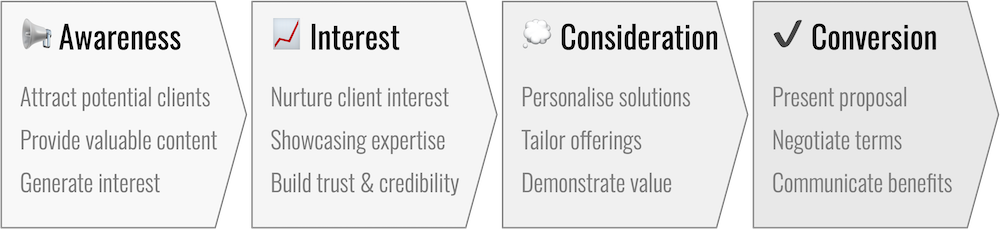
A structured funnel helps guide prospects from discovery to becoming paying clients.
Funnel Stages:
- Awareness: Use content marketing, SEO, and social media to attract attention.
- Interest: To build trust and share case studies, testimonials, and thought leadership content
- Consideration: Offer tailored solutions and proposals that address specific client needs.
- Conversion: Clearly present your proposals and close deals with straightforward agreements.
4. Leverage Online Platforms and Networking
Building relationships is just as important as advertising your services.
Action Steps:
- Connect with industry professionals on LinkedIn and participate in relevant discussions.
- Join online forums or groups where your target clients are active.
- Attend industry-specific events, workshops, and conferences to build personal connections.
FAQ: Client Acquisition for Solo Consultants
- How crucial is defining my ideal client before seeking new business, and what practical steps should I take? Defining your ideal client is absolutely fundamental. Without a clear understanding of who you’re targeting, your marketing efforts will be scattered and less effective. To define your ideal clients, you should conduct thorough market research to understand their needs, pain points and preferences. Identify key attributes such as industry, company size, location, and budget. Finally, ensure your marketing strategy is specifically tailored to attract these prospects, which ensures you’re reaching the right people with the right message.
- What are some effective marketing strategies a solo consultant can use to attract clients? A variety of marketing strategies can be effective. Content marketing, where you create articles, blog posts or videos that address your audience’s problems, is very beneficial for demonstrating your expertise. Social media, particularly LinkedIn, can be used to share insights and engage in relevant discussions. Email marketing helps to nurture leads and create a direct point of contact. In addition, networking by attending industry events and creating referral programs can build strong connections and opportunities.
- What does a client acquisition funnel involve, and how does it guide prospects through the process of becoming a client? A client acquisition funnel is a structured system that guides potential clients from initial discovery to becoming a paying client. The funnel typically involves several stages: Awareness, where you use content marketing, SEO and social media to attract attention; interest, where you build trust through case studies, testimonials and thought leadership; Consideration, where you offer tailored solutions; and finally, Conversion, where you present proposals and close deals. This structured approach helps to ensure that prospects are systematically guided through the sales process, increasing the likelihood of converting them into clients.
- How can online platforms and in-person networking be leveraged to build a client base? Both online platforms and face-to-face networking are crucial for building a client base. On platforms like LinkedIn, you can connect with industry professionals and participate in relevant discussions. In online forums and groups where target clients are active, you can showcase your expertise. In-person networking, achieved by attending industry events, workshops and conferences, is equally important. This can result in personal connections, which are key to relationship building, and ultimately in gaining clients.
- Which of the marketing strategies mentioned would be the most beneficial for a consultant who is just starting out? For consultants just starting out, content marketing and networking are particularly valuable. Content marketing allows you to establish your expertise and demonstrate value to potential clients from the outset. Networking, both online and offline, is excellent for building relationships and getting your name out in the industry. Focus on creating useful content that addresses your target clients’ pain points, and attend industry events or join relevant groups online to start building relationships.
- How important are referrals to a solo consultant, and how can you incentivise them? Referrals are a powerful tool for a solo consultant as they are based on trust and positive experience. To incentivize referrals, you can offer discounts or other rewards to existing clients who refer new clients to your business. This strategy not only brings in more leads but also reinforces your relationship with existing customers and encourages them to keep coming back.
- How can a consultant ensure they offer solutions tailored to each potential client’s specific needs? To offer tailored solutions, it’s essential to engage in active listening and thorough questioning during your initial consultations with potential clients. Understand their specific needs, challenges, and goals. Analyse how your expertise can provide them with solutions to meet these exact needs. Tailor your proposals and services to directly address their unique situations, demonstrating that you understand their individual needs and providing them with the solutions they are looking for.
- What is the biggest takeaway for solo consultants to keep in mind when attempting to acquire clients? The key takeaway is that client acquisition is an ongoing process. It requires a strategic approach, consistent effort, and a commitment to understanding your ideal client. By focusing on clearly defining your target audience, implementing effective marketing strategies, and maintaining a structured client acquisition funnel, you will improve your chances of turning prospects into satisfied clients. It’s also important to consistently engage with your potential clients and adapt your strategy based on your results.
Final Thoughts
Client acquisition is an ongoing process that requires strategic planning and consistent effort. By identifying your ideal clients, implementing effective marketing strategies, and building a client acquisition funnel, you’ll increase your chances of turning prospects into satisfied clients.
Which strategy will you focus on first? Share your thoughts in the comments—let’s grow together!